 Read the current edition
Art & design guide · Version 2.1
Sishu
Cartoon Natural
A warm, curious world built around the story.
For editors, illustrators and designers making Shishu Kishora: Odia writing with room to breathe, expressive artwork and a clear path from discovering a story to reading it.
Sishu Cartoon Natural · Stories, play & discovery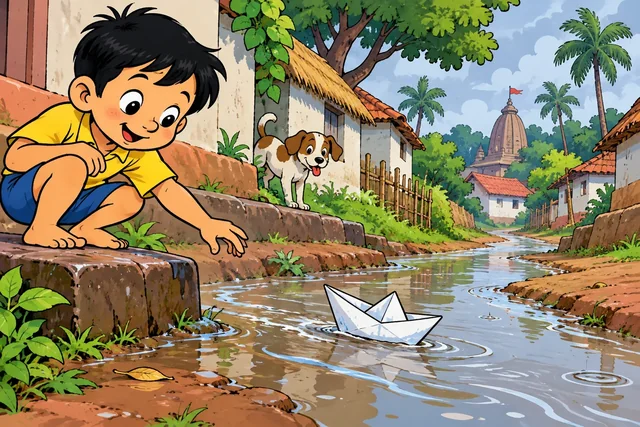
Monthly magazine
Issue → article → writer.
Use five main destinations: This month, Past issues, Books, Writers and Write. Home shows the current cover and three article previews; full contents live on one issue page. Past issues are grouped by year. Keep the editor’s note, About and Contact easy to find in the footer.
Remove duplicate destinations and stale notices from the reading paths. Preserve original writing and scans. Ebooks use a quiet book reader. Only source-compared transcription enters text mode; other pages retain the original scan while proofreading continues.
Review the site structure and clean-up decisions01 / Illustration language
One family of images. Many kinds of feeling.
Use the story’s emotional centre to choose the scene. Expressive cartoon drawing and flat painted colour hold the family together; the writing decides the mood, setting and viewpoint.
Everyday wonder
A paper boat becomes an adventure. Stay close to the child’s attention; leave the wider world lightly described.
ମୁଁ ଯେ କାଗଜ ଡଙ୍ଗା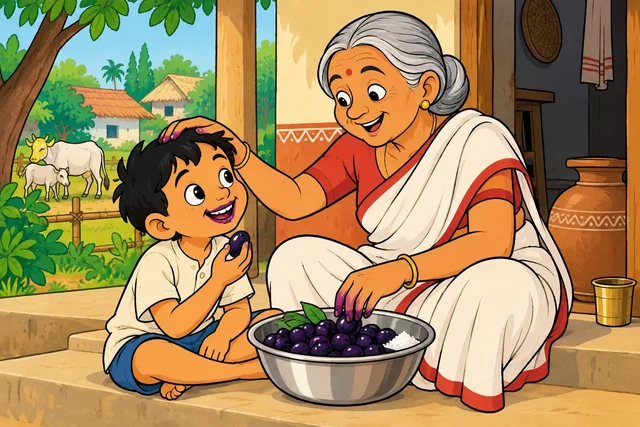
Family warmth
Show affection through a shared action and ordinary proximity, without posing everyone for the viewer.
ଖାଉଛୁ ଯେତେ ତୁ ଖାଆ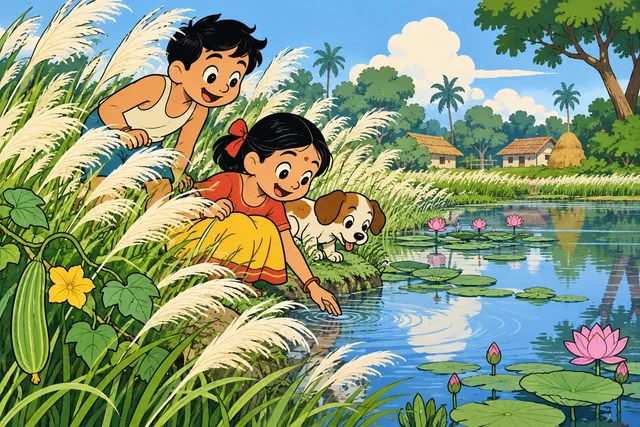
Nature & poetry
Let weather, space and a few observed details carry the feeling. People need not appear in every image.
ପାର୍ବଣ ପାର୍ବଣ ବାସିଲାଣି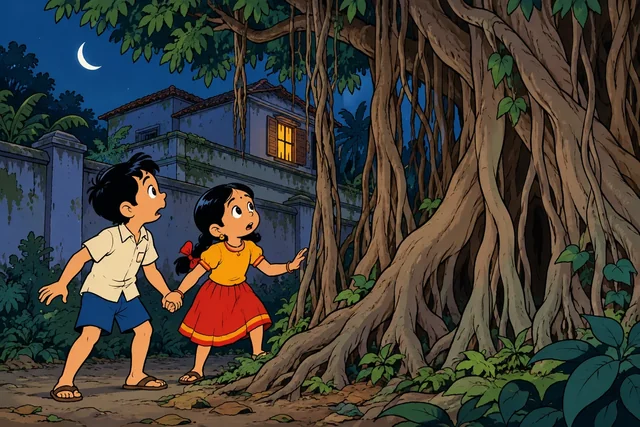
Mystery & discovery
Use scale, shadow and an unanswered question. Preserve suspense without adding graphic fear or revealing the ending.
ଗୁଡ଼ୁଲ- ଗୁଡଲିଙ୍କ ରହସ୍ୟମୟ ଯାତ୍ରାର ଭାଗ-୪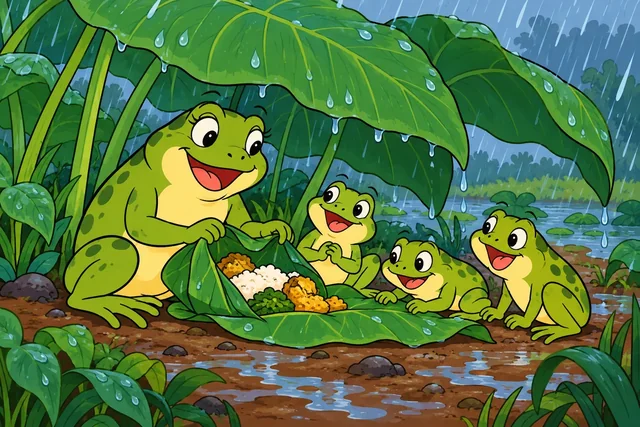
Playful imagination
Animal characters can be whimsical when the writing supports it. Keep expression, action and spatial relationships clear.
ଅକଲ ମକଲ ଟକଲ ଟିଆଁ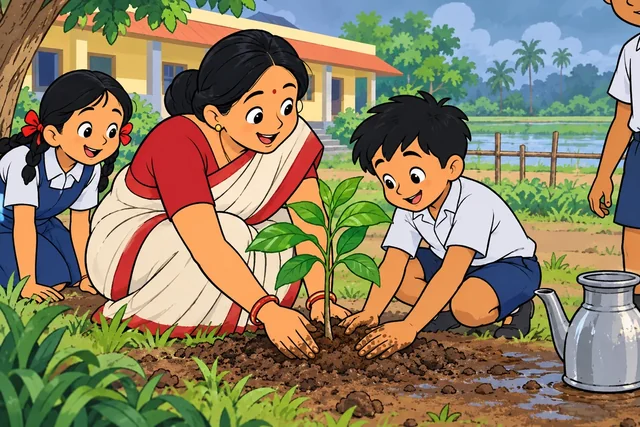
Learning together
Illustrate participation and curiosity. The useful gesture matters more than a perfectly arranged group.
ବନ ମହୋତ୍ସବMake it feel inhabited
Children attend to the boat, animal, puzzle or person in front of them. Fabrics have weight, rain makes surfaces wet, and light comes from somewhere. A few expressive lines can say more than detail everywhere.
Fantasy is welcome when it belongs to the writing. Younger readers can enjoy expressive characters while older readers find atmosphere and narrative depth.
Keep the world varied
Follow the text into villages, towns, schools, contemporary homes and imagined places. Avoid turning every article into the same rural memory, festival scene or smiling group.
Do not add picturesque dirt, grain or worn surfaces to prove authenticity. Quiet areas, ordinary gestures and selective detail create a more convincing world.
02 / Colour & type
Warm paper. Strong words. Colour in the art.
#fffcf6#3e3530#a53628#49634b#364c69#ac792e#e5dbccPaper and ink are the page foundation. Storybook red identifies links and small headings. Leaf, indigo and ochre are optional illustration accents, not competing backgrounds behind every section.
Keep the existing magazine masthead. Do not tint its colours or redesign printed-book covers to match the palette.
ମୁଁ ଯେ କାଗଜ ଡଙ୍ଗା
ହଂସନାଥ ମୁଦୁଲି
Noto Serif Oriya for literary text; Noto Sans Oriya for navigation. Body: 20px with generous line spacing. Card titles: 21px. Bylines and controls: at least 14px in new templates.
Preserve Odia shaping and poem line breaks. Avoid forced justification, tight spacing and text over pictures.
03 / Page patterns
Discover, choose, read.
Edition contents
- Start with the edition name and date.
- Offer simple genre links, followed by grouped article cards.
- Each card contains one image, unchanged title, author and reading link.
- Use three columns on desktop, two on tablet and one on a phone.
Frame artwork at 3:2 with a quiet paper surround. Preserve the full composition; do not stretch or crop faces to force a match. Let longer titles wrap naturally.
Reading page
- Show the edition breadcrumb, genre, title and byline.
- Keep one supporting illustration near the opening, without a full-screen hero.
- Give the writing a comfortable single reading column.
- Finish with a clear return to the edition and existing feedback options.
Keep pages static. No moving backgrounds, autoplay, pop-ups, image parallax or decoration between every stanza. Use a small motif only when it supports the text.
Accessibility and image use
Keep text as real text. Give linked cards one clear accessible name and a visible keyboard focus. A decorative card image can use empty alternative text when its linked title provides the destination; a meaningful illustration on the reading page should have a concise scene description. Never rely on colour alone. Preserve image dimensions to reduce layout shifts and lazy-load images below the opening view.
Covers, portraits and existing material
Printed covers remain unchanged. A new cover may be commissioned for a confirmed digital-only publication; keep the title and authorship exact and preserve the original asset. A PDF or a scan alone does not establish digital-only status. Use genuine photographs for author identity, never an invented likeness. Retain original article artwork in the archive until a replacement is commissioned.
04 / Next edition
A repeatable editorial rhythm.
Read
Read the complete text. Record title, author, genre, setting, emotion and the passage supporting the visual idea.
Choose
Select one scene and viewpoint. Check the neighbouring articles so a whole edition does not repeat the same composition.
Illustrate
Use expressive cartoon characters and a clear narrative moment. Simplify faces, folds and scenery; avoid photographic rendering. Keep lettering out of the artwork.
Review
Look at normal card size first. Check story fit, gestures, anatomy, cultural details and emotional tone. Correct specific problems.
Place
Use the same image on the edition card and reading page. Keep all editorial wording intact. Check desktop and phone.
Record
Save the source reference, exact prompt, selected asset and review notes. Keep original assets and production records.
05 / Prompt template
Start with a moment, not a style filter.
Fill this brief after reading the article. Remove fields that do not apply; add only details the writing supports.
Create a standalone illustration for Shishu Kishora in the Sishu Cartoon Natural direction.

Article: [unchanged title and author; reference the complete source text]
Mode: Sishu Cartoon Natural [playful / tender / mysterious / seasonal]
Emotional anchor: [one feeling, grounded in the text]
Text evidence: [the passage or situation supporting this direction]
Scene: [one meaningful lived moment; who, where and when]
Behaviour: [what the subjects are doing and attending to]
Viewpoint: [close detail / child-height scene / wider landscape]
Drawing: [simple silhouettes, clear gesture, selective background detail]
Art direction: expressive 2D cartoon drawing with bold ink outlines, simplified faces and flat painted colours; focus detail on the narrative action and leave some areas quiet. Choose colours for this scene rather than applying a universal nostalgic wash.
Continuity: [recurring character or setting references, when relevant]
Preserve: [mood, cultural context and narrative facts]
Avoid: [specific unsupported elements, spoilers or visual problems]
Output: landscape 3:2, no lettering, title, author name, logo or page layout. Keep the emotional anchor legible at card size. Do not arrange every person or object to face the viewer.
Before publishing
Does this image belong to this story? Does its subject read at card size? Do gestures and objects make sense? Is the mood appropriate? Does the edition have variety? Are the title, author and writing intact?